
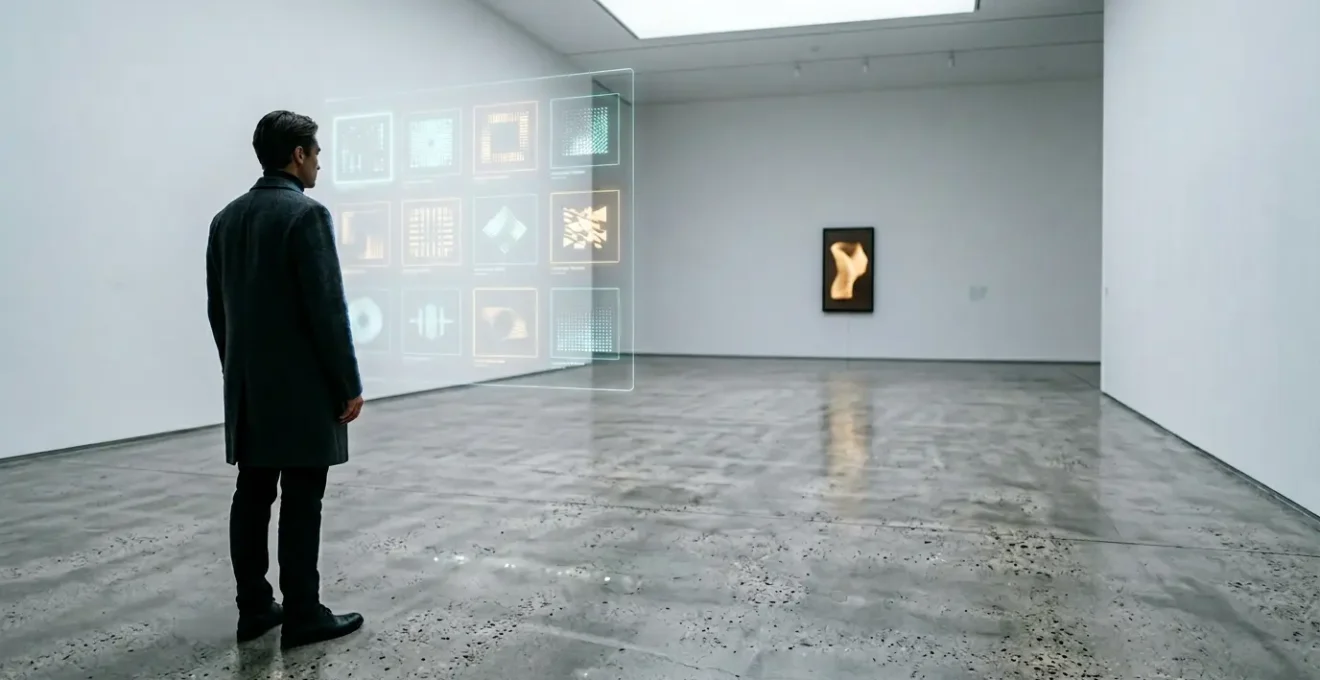
The digital art market is not a new game, but an evolution of the timeless principles of provenance, scarcity, and connoisseurship, now secured by cryptographic tools.
- Digital value is rooted in verifiable, unforgeable ownership on the blockchain, not the infinite reproducibility of the image itself.
- Security is paramount; a professional multi-wallet strategy is the equivalent of a physical art vault, protecting assets from digital threats.
Recommendation: Approach this market by applying traditional due diligence to new technological frameworks, focusing on the integrity of the smart contract and the artist’s on-chain history.
For the seasoned collector accustomed to the heft of a bronze sculpture or the textured canvas of an oil painting, the digital art market can feel unnerving. The idea that a JPEG file—infinitely reproducible with a simple right-click—could command a price rivaling a physical masterpiece seems to defy logic. The common advice to “get a crypto wallet” and “beware of scams” is often too superficial, failing to bridge the gap between the familiar world of physical provenance and the abstract realm of the blockchain.
This landscape, populated by terms like NFTs, smart contracts, and generative AI, appears to be a radical departure from the established art world. However, this perception is a misunderstanding of the core mechanics at play. The fundamental principles that have governed the art market for centuries—scarcity, authenticity, provenance, and artist legacy—have not been discarded. They have been re-encoded into a new, transparent, and permanent digital ledger.
But what if the true key for the traditional collector is not to become a tech evangelist, but to apply their time-honed skills of connoisseurship to this new medium? The challenge lies in learning to read the new signals of value and authenticity. This guide is structured to move beyond the hype and provide a historian’s cautious perspective, translating the abstract concepts of digital ownership into the tangible language of collecting. We will explore how value is established, how to display and protect these assets, and how to verify the new form of “artist’s signature” that is the smart contract.
To navigate this complex terrain with confidence, this article breaks down the essential pillars of the digital art market. The following summary outlines the key areas a discerning collector must master, from understanding value to executing a profitable sale.
Summary: A Collector’s Framework for the Digital Art Ecosystem
- Why a JPEG Can Be Worth More Than a Physical Painting?
- How to Display NFT Art in Your Living Room with High-Res Frames?
- Coded Art or Hand-Drawn Digital: Which Holds Value Better Over Time?
- The Wallet Security Error That Cost a Collector $2 Million
- How to Time Your Secondary Market Listing for Maximum Profit?
- How to Use Smart Contracts to Secure Digital Agreements Without Lawyers?
- How to Use Generative AI Without Losing Your Creative Voice?
- How to Use Smart Contracts to Secure Digital Agreements Without Lawyers?
Why a JPEG Can Be Worth More Than a Physical Painting?
The central paradox for any traditional collector is how an ephemeral, easily copied digital file can possess monetary value. The answer does not lie in the image itself, but in the revolutionary concept of cryptographic provenance. Unlike a physical artwork, where authenticity is verified through paperwork, expert opinion, and historical records, a Non-Fungible Token (NFT) has its ownership and history immutably recorded on a public blockchain. This digital ledger is the ultimate certificate of authenticity, transparent and unforgeable.
This creates a new form of value: provable digital scarcity. While anyone can save a copy of the image, only one person can own the official token. This is analogous to owning an original Picasso; countless prints and posters may exist, but only the original canvas holds the true value conferred by the artist’s hand and its documented history. In the digital realm, the token is the “original,” and the blockchain is its perfect, permanent provenance record. The scale of this new market is staggering, with a valuation expected to grow from $51.4 billion in 2024 to a projected $407.7 billion by 2034.
This shift introduces a new paradigm for legacy and permanence. Physical art is subject to degradation, loss, and theft. A digital asset, secured on the blockchain, offers a different kind of longevity. As the documentation for the generative art platform Art Blocks states:
The blockchain is totally immutable—permanent, unchangeable, unhackable. So, your digital art is an investment that can be passed down through generations until the end of time.
– Art Blocks Platform Documentation, Public.com Art Blocks Guide
Thus, the value of a “JPEG” is a function not of its visual data, but of the unbreakable chain of ownership that makes it a unique, collectible asset. For the collector, the mindset must shift from assessing a physical object to verifying a digital title deed.
How to Display NFT Art in Your Living Room with High-Res Frames?
A digital collection should not be confined to a folder on a computer. Integrating digital art into a physical space is crucial for its appreciation and requires the same curatorial attention as hanging a physical painting. The market has responded with a new generation of high-resolution digital frames designed specifically to honor the integrity of the artwork. These are not simply repurposed monitors; they are specialized devices focused on color accuracy, texture, and authenticated display.
Choosing the right frame is an act of connoisseurship. The goal is to present the work as the artist intended, without the harsh backlights or glossy reflections of standard screens. Premium frames often feature anti-glare, matte surfaces that mimic the look of paper or canvas, and they connect directly to your crypto wallet to display a QR code or token ID, proving the authenticity of the piece being shown. This act of public verification is the digital equivalent of a museum plaque, linking the visual display to its cryptographic provenance.
When selecting a display, a collector must consider several technical specifications to ensure a faithful reproduction. Key factors include a screen resolution that matches or exceeds the artwork’s native resolution (typically 2K or 4K), a wide color gamut capable of rendering millions of colors accurately, and an aspect ratio that respects the artist’s original composition. The most sophisticated frames even offer automatic orientation switching for works designed in portrait or landscape.
Coded Art or Hand-Drawn Digital: Which Holds Value Better Over Time?
As a collector develops a discerning eye, the question of medium becomes paramount. In the digital art space, a key distinction exists between works created “by hand” using digital tools (like drawing on a tablet) and “coded” or generative art, where the artist writes an algorithm that produces the final visual output. While both are valid forms, their implications for long-term value and preservation are profoundly different, a concept that a market historian would find fascinating.
Hand-drawn digital art often relies on external file hosting (like IPFS, the InterPlanetary File System) to store the image, which is then linked to the NFT. This can create a point of failure; if the hosting service disappears or the link breaks, the token could end up pointing to nothing. In contrast, the most sophisticated generative art projects store the creative code itself directly on the blockchain. This is known as on-chain permanence. The artwork isn’t a stored file; it is a set of instructions that can be re-executed at any time to perfectly recreate the art. The market has shown a strong preference for this method, with platforms like Art Blocks generating over $100 million in sales in their first year by championing this approach.
Case Study: The Longevity Advantage of Art Blocks
Art Blocks is a platform that stores an artist’s generative script directly on the Ethereum blockchain. This ensures that the artwork will exist and be renderable as long as the Ethereum network itself survives, completely independent of the Art Blocks platform. This solves the “link rot” vulnerability of art stored off-chain. By embedding the algorithmic oeuvre into the blockchain, the code becomes the artwork, ensuring its permanent preservation and accessibility. This method provides the highest degree of confidence in the long-term viability of an acquired piece.
From a collector’s perspective, on-chain generative art often represents a purer, more durable form of digital asset. The investment is not just in a visual outcome, but in the elegant, self-contained algorithm that can be seen as the artist’s unique “digital DNA.” This focus on the underlying process over the final image is a sophisticated form of connoisseurship unique to the digital age.
The Wallet Security Error That Cost a Collector $2 Million
The unparalleled security of the blockchain itself can create a false sense of safety. While the ledger is immutable, an individual’s access to it—their wallet—is a significant point of vulnerability. The history of the digital art market is unfortunately littered with cautionary tales of collectors losing priceless assets not to a hack of the blockchain, but to simple social engineering or poor personal security practices. This is the modern equivalent of leaving the keys to the vault in plain sight.
Case Study: The Bored Ape Yacht Club Phishing Attack
In a well-documented incident, the official Instagram account for the blue-chip Bored Ape Yacht Club project was compromised. Attackers posted a fraudulent link promising an exclusive new release. Users who clicked the link and connected their wallets were unknowingly approving a malicious smart contract that immediately drained their accounts of valuable NFTs and cryptocurrency. This attack resulted in the loss of assets valued at approximately $3 million, demonstrating that even sophisticated collectors can be duped by scams originating from seemingly trustworthy sources.
This incident underscores a critical lesson: interacting with the blockchain requires immense caution. Every “approve transaction” pop-up from a wallet is like signing a legally binding contract. Without understanding what permissions are being granted, a collector can inadvertently give a malicious actor complete control over their assets. For a traditional collector, the abstract nature of a crypto wallet must be reconceptualized as a high-security vault that requires disciplined operational protocols.
Protecting a digital collection is not a passive activity. It demands a proactive, multi-layered strategy that separates daily transactions from long-term holdings. The “wallet as a vault” is more than a metaphor; it is an essential security framework.
Action Plan: Implementing a Professional Multi-Wallet Security Strategy
- Hot Wallet (For Minting): Use a browser-based wallet (e.g., MetaMask) exclusively for active minting and low-value transactions. Never store high-value, long-term holdings in this wallet.
- Warm Wallet (For Displaying): Maintain a separate wallet for assets you wish to showcase in digital galleries or on frames. This isolates your main collection from platforms that require wallet connections.
- Cold Wallet (The Vault): Store all high-value NFTs in a hardware wallet (e.g., Ledger, Trezor) that is kept completely offline. This is your digital vault and should only be connected to a computer when absolutely necessary.
- Revoke Permissions Regularly: Use tools like Revoke.cash on a monthly basis to audit and cancel any active smart contract permissions on all your wallets, especially the hot wallet.
- Secure Your Digital Estate: Document wallet access procedures and seed phrase locations in secure physical storage (never digitally). Establish a clear succession plan for your digital assets.
How to Time Your Secondary Market Listing for Maximum Profit?
Acquiring a piece of digital art is only the first step. For many collectors, the eventual goal is to realize a return on their investment by selling on the secondary market. Just as the traditional art world has a hierarchy of galleries, dealers, and prestigious auction houses, the digital market has its own ecosystem of platforms, each with distinct advantages for liquidity, prestige, and fees. Making a profitable sale is as much about choosing the right venue as it is about timing.
As the experts at Sotheby’s note, the secondary market is what provides the essential liquidity for these assets. In a glossary for new digital art collectors, they state:
Secondary markets provide liquidity to the holders and allow digital art collectors to trade assets directly. Some marketplaces are noncurated, allowing for anyone to buy, bid and mint NFTs, while others represent a curated selection.
– Sotheby’s Digital Art Dictionary, Sotheby’s NFT Terms Glossary
This distinction between “noncurated” and “curated” is critical. High-volume marketplaces like OpenSea function like massive open art fairs, offering broad reach and fast liquidity but with less prestige. In contrast, curated platforms like Foundation or auction houses like Sotheby’s Metaverse act as gatekeepers, offering access to high-net-worth collectors and the potential for record-setting prices, but at the cost of slower sale cycles and higher fees. The choice of platform should align directly with the collector’s goal, whether it be a quick flip or establishing a new price benchmark for a blue-chip asset.
The following comparison breaks down the strategic considerations for listing an asset on the major secondary market platforms, a crucial decision for any collector.
| Platform | Type | Audience | Liquidity Speed | Fee Structure | Prestige Signal | Best For |
|---|---|---|---|---|---|---|
| OpenSea | High-volume marketplace | Mass market, 1M+ monthly users | Fast (hours to days) | 2.5% platform fee | Low to Medium | Quick liquidity, broad reach |
| Blur | Professional trading | Advanced traders, high volume | Very Fast (minutes to hours) | 0% platform fee (royalty optional) | Medium | Maximum speed, minimal fees |
| Foundation | Curated platform | Art collectors, connoisseurs | Slower (days to weeks) | 15% on primary, 5% secondary | High | Artist reputation, prestige buyers |
| Sotheby’s Metaverse | Auction house | High-net-worth collectors | Slowest (auction cycles) | Variable (auction premiums) | Very High | Blue-chip NFTs, record prices |
How to Use Smart Contracts to Secure Digital Agreements Without Lawyers?
The term “smart contract” is often intimidating, but for a collector, it can be demystified by a simple analogy: it is the artwork’s digital title deed, purchase agreement, and certificate of authenticity all rolled into one. It is a self-executing agreement with the terms of the sale written directly into code. This code governs everything from the initial minting process to the percentage of royalties the artist receives on all future secondary sales. Understanding how to perform due diligence on a smart contract is perhaps the most crucial skill a digital art collector can develop.
However, a significant risk lies in the lack of transparency. Not all smart contracts are created equal. The code can contain clauses that give developers excessive control, such as the ability to freeze assets or change the rules of the collection after the mint. Alarmingly, research on the blockchain has revealed that a substantial portion of contracts are “closed-source,” meaning their code cannot be independently audited by the public. One academic study found that 28.37% of NFT token contracts were closed-source, creating a black box of risk for uninformed buyers.
For the traditional collector, this is where old-world skepticism is a valuable asset. Just as you would have an expert authenticate a painting’s signature and papers, you must learn to “authenticate” a smart contract. This involves using blockchain explorers like Etherscan to check for several key indicators of legitimacy and fairness:
- Source Code Verification: The first and most important check is to see if the contract code is verified and open-source. An unverified contract is an immediate red flag.
- Centralized Control: Look for functions that grant a single “owner” or “admin” powerful privileges, such as pausing the contract or changing royalty fees. Decentralization is a sign of a more trustworthy project.
- Contract Upgradability: Identify if the contract is a “proxy” contract. This means the developers can replace the underlying code entirely, introducing potential new risks or features without collector consent.
- Adherence to Standards: Confirm the contract complies with established token standards like ERC-721 or ERC-1155 to ensure interoperability and security across the ecosystem.
This process of due diligence is the collector’s primary defense against both poorly constructed and outright malicious projects. It transforms the smart contract from a source of anxiety into a tool of empowerment.
How to Use Generative AI Without Losing Your Creative Voice?
Generative AI has introduced another layer of complexity and opportunity into the digital art world. For artists, it presents a powerful new tool; for collectors, it raises questions about authorship, originality, and long-term value. Is the artist the one who conceives the idea, the one who curates the AI’s output, or the AI itself? The most respected projects in this space address this by positioning the generative algorithm not as a replacement for the artist, but as the core of the creative voice itself.
The concept of “the art is the algorithm” finds its roots in early on-chain art projects that predate the recent AI boom. These projects used deterministic algorithms to create art, where the code itself was the masterpiece. This approach provides a useful framework for evaluating modern generative AI art. A strong project is not one that simply uses an off-the-shelf AI model to produce generic images, but one where the artist has built a unique system with specific constraints and aesthetic goals. The value lies in the human ingenuity behind the machine.
Historical Precedent: Autoglyphs, the ‘Cave Paintings of On-Chain Art’
Launched in 2019 by Larva Labs (creators of CryptoPunks), Autoglyphs are widely considered the first piece of “on-chain” generative art. The entire algorithm for creating the ASCII art is embedded within the smart contract on the Ethereum blockchain. Collectors did not buy a pre-made image; they paid a fee to run the generator, which created and registered a unique artwork directly on-chain in a single transaction. The project, now in the collections of the Centre Pompidou and the Whitney Museum, formalized the idea that the algorithmic oeuvre—the code itself—is the art, establishing a model for verifiable and ethically created generative works.
For collectors, this means the evaluation process must go deeper than the surface visual. Due diligence involves understanding the artist’s process. Did they train their own AI model? Did they build a custom generative script? Is the output constrained and unique, or does it feel generic? As one on-chain art researcher has noted, the constraints of the blockchain itself often force a higher level of creativity, separating true digital artisans from casual users of AI tools.
Key takeaways
- The value of digital art is anchored in its unforgeable cryptographic provenance on the blockchain, not the reproducibility of the image.
- A disciplined, multi-layered wallet security strategy—treating your cold wallet as a vault—is the most critical defense against theft and scams.
- The most durable and potentially valuable digital artworks are often those whose creative code is stored directly “on-chain,” ensuring their permanent preservation.
How to Use Smart Contracts to Secure Digital Agreements Without Lawyers?
Having journeyed through the concepts of value, display, security, and market dynamics, we return to the technological heart of the matter: the smart contract. Ultimately, every action a collector takes—acquiring, holding, or selling a digital asset—is mediated by this piece of code. Viewing it not as an obstacle but as the ultimate tool for security and verification is the final step toward mastery of this market. It is the mechanism that codifies and automates trust, removing the need for traditional intermediaries like lawyers or escrow agents in many transactions.
The core lesson for the traditional collector is to apply their existing diligence to this new format. A smart contract is a dense document, just like a multi-page physical art purchase agreement. While you may not understand every line of code, you can learn to spot the key clauses that matter: ownership functions, royalty structures, and token standards. This is not about becoming a developer; it is about becoming an informed and empowered owner who knows what questions to ask and which red flags to look for.
The entire digital art ecosystem is built on the premise that code can be law. By taking the time to understand the basic principles of these digital agreements, a collector moves from being a passive buyer to an active, strategic participant. You learn to trust the transparency of the blockchain while maintaining a healthy skepticism of the human-written code that runs upon it. This balanced perspective—embracing the technology while applying timeless principles of caution—is the hallmark of a successful digital art collector.
To apply these principles effectively, the next logical step is to perform a thorough security audit of your current digital assets and wallet structure, ensuring your collection is protected by the professional standards outlined in this guide.