
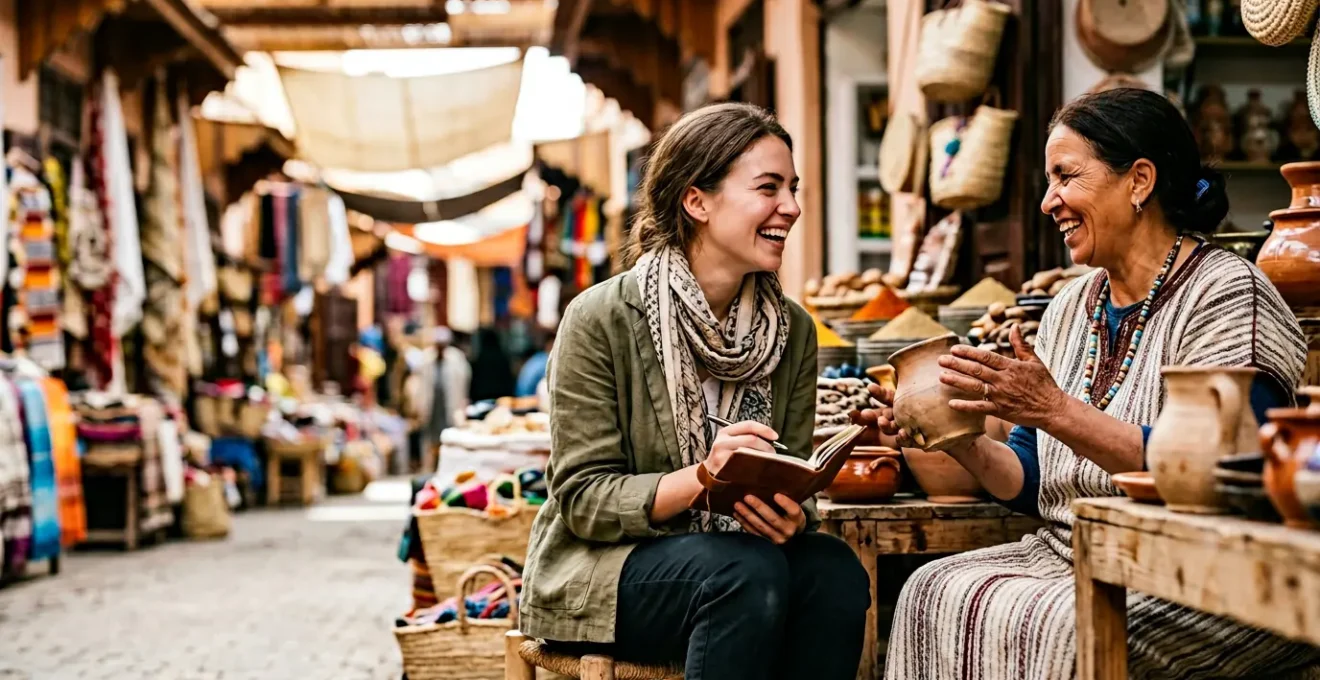
Contrary to popular belief, authentic travel isn’t found by hunting for “hidden gems” but by fundamentally shifting your mindset from a consumer to a respectful participant.
- The most common travel advice often fails because it focuses on *what* to do (e.g., “eat local”), not *why* it matters or *how* to do it respectfully.
- Genuine connection stems from understanding the cultural context behind local behaviors, from language to photography etiquette.
Recommendation: Focus on small, meaningful interactions and prioritize supporting community-based initiatives over simply visiting popular sites.
There’s a universal anxiety that gnaws at the modern traveler: the fear of being “that tourist.” The one who is loud, intrusive, and oblivious, turning a sacred space into a selfie backdrop. We all want authentic experiences and genuine connections, to feel like we’ve touched the true heart of a place. Yet, we are often armed with the same generic advice: “learn a few phrases,” “be respectful,” “eat local.” While well-intentioned, this advice is a map without a compass. It tells us the destination but not how to navigate the complex social terrain to get there.
This approach often leads to a transactional form of travel. We collect experiences, foods, and photos, but the interactions remain superficial. We stay on the surface, interacting with a local economy that has been shaped to serve us, rather than participating in the culture that exists for itself. We might visit a local market but fail to engage in the simple reciprocity of a genuine conversation. We might even find a non-tourist restaurant but still feel like an outsider looking in.
But what if the key to unlocking deep cultural immersion wasn’t in a better checklist, but in a fundamental mindset shift? What if, instead of trying to *find* authenticity, we focused on *earning* it through our actions? This guide is built on that principle. It’s about moving from a passive consumer to an active, respectful participant. We will explore the ‘why’ behind the common travel pitfalls and provide concrete strategies to not just see a new place, but to connect with it on a human level. By understanding the dynamics of language, dining, accommodation, and even timing, you can transform your journey into a more meaningful exchange for both you and the communities you visit.
This article will guide you through the practical steps and mental frameworks needed to become a more conscious and connected traveler. From decoding local etiquette to engaging with history in a meaningful way, you’ll find the tools to build bridges, not walls.
Summary: A Guide to Meaningful Cultural Connection
- Why Locals Resent Tourists Who Don’t Attempt the Language?
- How to Ask for Recommendations to Find Non-Tourist Restaurants?
- Homestay or Boutique Hotel: Which Supports the Local Economy More?
- The Photo Mistake That Offends Locals in Religious Sites
- When to Visit: Why Off-Season Travel Unlocks Deeper Connections?
- How to Plan a Multi-City Trip for a Group of 6 Without Fighting?
- How to Make Historical Sites Engaging for Teenagers?
- How to Make Historical Sites Engaging for Teenagers?
Why Locals Resent Tourists Who Don’t Attempt the Language?
The expectation isn’t fluency; it’s effort. When a traveler defaults to their native tongue without even a simple “hello” or “thank you” in the local language, it sends an unintentional signal of entitlement. It implies that the burden of communication falls entirely on the host, turning a potential human interaction into a mere service transaction. This isn’t just about politeness; it’s about acknowledging that you are a guest in someone else’s home. The effort to speak a few words demonstrates respect for the local culture and a willingness to step outside your comfort zone. This simple act can transform a transactional exchange into a relational one.
Travelers themselves recognize this. In fact, over 84% of Americans expressed that learning a local language was important to them when traveling, showing a clear desire to connect. The disconnect happens when this intention isn’t put into practice. The frustration on the local side often isn’t anger, but weariness. As one travel research analysis notes, the friction is mutual. According to Yahoo News Travel Research, “Language barriers compound frustration on both sides, as tourists struggle to communicate basic needs while locals become impatient with repeated explanations.”
Learning five to ten basic phrases—hello, goodbye, please, thank you, excuse me, and how to ask “Do you speak English?”—acts as a bridge. It shows humility and opens the door to warmer, more patient interactions. It changes the dynamic from a demanding consumer to a respectful participant, and that small shift is often all it takes to be welcomed rather than merely tolerated.
How to Ask for Recommendations to Find Non-Tourist Restaurants?
The generic question, “Where’s a good place to eat?” almost guarantees a generic, tourist-safe answer. To find truly authentic dining experiences, you need to change your approach from a general query to a personal one. Instead of asking for a “good” restaurant, ask for a “real” one. Frame your question around context and personal experience. For example, try asking a shopkeeper, a taxi driver, or your hotel receptionist, “Where would you take your own family for a special celebration?” or “What’s your favorite place for a simple, traditional lunch that tourists don’t know about?”
This reframing shifts the interaction from a service request to a request for a personal story. It invites them to share a piece of their life, not just a pre-approved recommendation. The goal is to find places where the menu isn’t translated into five languages and the clientele is primarily local. As a rule of thumb, venturing a few blocks away from the main tourist squares can reveal hidden gems where the food is more authentic and the prices are more reasonable. This is an act of respectful participation in the local economy, ensuring your money supports small, family-run businesses rather than large tourist-focused enterprises.
As you can see in this kind of authentic setting, the atmosphere is as important as the food. It’s about being in a space designed for the community, not just for visitors. Supporting these “mom-and-pop” shops is a direct way to invest in the local culture and ensure that tourism benefits the people who live there. Your choice of where to eat is an economic vote, and choosing local strengthens the community’s fabric.
Action Plan: Auditing Your ‘Traveler’s Signal’
- Points of Contact: List all the ways you interact with the local culture (your language attempts, clothing choices, body language, where you choose to eat and shop).
- Collection: Inventory your current travel habits. Do you default to English immediately? Do you only visit places with high online ratings from other tourists?
- Coherence: Does your behavior align with your stated goal of respectful participation, or does it signal a preference for comfort and convenience?
- Memorability & Emotion: Are your interactions transactional and generic (e.g., just ordering and paying) or are you creating opportunities for relational, memorable exchanges?
- Integration Plan: Identify one or two habits to change. Prioritize learning five key phrases and make it a rule to walk five blocks off the main square before choosing a restaurant.
Homestay or Boutique Hotel: Which Supports the Local Economy More?
The choice between a homestay and a hotel isn’t just about a bed for the night; it’s a significant economic decision that directly impacts the local community. While large, international hotel chains may employ local staff, a substantial portion of their revenue often leaves the country. In contrast, smaller, locally-owned accommodations like boutique hotels and especially homestays ensure that your tourism dollars circulate directly within the community.
Homestays, in particular, offer a powerful model for sustainable, community-based tourism. When you stay in a family’s home, your money directly supports that family, helping them with everything from daily expenses to their children’s education. This creates a more equitable distribution of tourism revenue and fosters a sense of ownership and pride within the community. Beyond the financial aspect, it provides an unparalleled opportunity for cultural context. You’re not just a guest in a sterile room; you’re a temporary member of a household, sharing meals, stories, and daily rhythms of life.
The economic impact can be transformative. For example, research published in Scientific Reports shows that in Yangshuo, China, the contribution of tourism to the local GDP rose from 28% in 2004 to 51% in 2023, primarily driven by the development of community-based homestays. This demonstrates that when structured correctly, tourism can become the primary engine of a local economy without displacing its residents. Opting for a homestay or a locally-owned boutique hotel is one of the most direct ways to practice reciprocity in your travels, giving back to the community that hosts you.
The Photo Mistake That Offends Locals in Religious Sites
In the age of social media, the urge to capture every moment is powerful, but in a sacred or religious space, a camera can become a barrier instead of a tool. The most significant photo mistake isn’t about flash or tripods; it’s a mindset shift from witnessing to consuming. It’s the act of prioritizing the creation of an image over the experience of being present in a space that holds deep meaning for others. This is particularly true when taking photos of people in prayer or during a ceremony. It objectifies their devotion, turning a personal, spiritual moment into content for a foreigner’s feed.
Many religious sites have rules about photography, but respect goes beyond rules. The key is to observe first and shoot second, if at all. Ask yourself: Why am I taking this photo? Is it to remember the feeling of this place, or is it to prove I was here? Is my presence, with camera in hand, disrupting the very peace and sanctity I’ve come to see? As the G Adventures editorial team puts it, there’s a fine line between appreciation and appropriation.
If you’re not a professional photographer, taking a picture is the very definition of the distinction between looking and gawking.
– G Adventures Editorial Team, 4 tips for respectfully visiting religious sites
The most respectful approach is often to put the camera away entirely. Allow yourself to simply be in the space. Observe the light, the textures, the sounds, and the quiet reverence of the people around you. This act of respectful participation—of simply witnessing—will leave you with a far more profound and lasting memory than any photograph could. If you do feel a photo is appropriate, be discreet, avoid capturing people without their explicit permission, and let the architecture or details tell the story.
When to Visit: Why Off-Season Travel Unlocks Deeper Connections?
Traveling during the peak season often means contending with crowds, inflated prices, and stressed locals. The off-season, or the “shoulder seasons” just before and after, offers a completely different travel reality. It’s a strategic choice that benefits not only your wallet but also your ability to forge genuine connections. The financial incentive is clear: an analysis of seasonal travel pricing shows an average flight price reduction of 23% during shoulder season, with some periods offering even steeper discounts.
But the true value lies in the change of atmosphere. During peak months, popular destinations can suffer from what experts call “tourism fatigue.” This is a state of collective burnout where locals, overwhelmed by the sheer volume of visitors, become frustrated and withdrawn. The constant demand for services, crowded public spaces, and strain on infrastructure can lead to a less-than-welcoming environment. As wilderness educator James Reeves explains, this is a phenomenon that off-season travelers can completely avoid.
During peak season, locals in tourist-heavy destinations experience what psychologists call ‘tourism fatigue’—a state of frustration and annoyance with visitors. Off-season travelers avoid this phenomenon.
– James Reeves, Why Traveling Off-Season Could Be Your Best Vacation Ever
When you visit during a quieter time, you encounter a place in its more natural state. Shopkeepers have time for a chat, restaurant staff aren’t rushed off their feet, and public spaces are enjoyed by residents, not just tourists. This relaxed pace creates more opportunities for spontaneous, authentic interactions—the very essence of relational travel. You’re no longer just one of a thousand faces in a crowd; you’re a guest in a community that has the time and energy to welcome you.
How to Plan a Multi-City Trip for a Group of 6 Without Fighting?
Group travel, especially with a larger party, can test the strongest of friendships. The root of most conflicts isn’t a clash of personalities but a failure to manage expectations and decision-making. A successful group trip requires a proactive structure that balances collective goals with individual needs. The key is to establish a framework for harmony *before* you even leave home.
Instead of ad-hoc decisions on the road, which lead to fatigue and frustration, implement a system. One of the most effective strategies is to assign roles based on passion. Let the foodie be the “Head of Food,” the history buff be the “Chief of History,” and so on. This empowers individuals, distributes the mental load, and ensures everyone gets to share what they love. Another powerful tool is creating a “Group Travel Constitution” where each person lists one non-negotiable “must-do” activity and one “hard-pass.” This simple exercise brings potential conflicts to the surface early and guarantees everyone’s top priority is respected.
Finally, building in autonomy is crucial for maintaining peace. Constant togetherness can be draining. Here are some proven strategies for group harmony:
- Grant each person a veto: Give everyone one “no-questions-asked” veto they can use to opt out of an activity, reducing pressure to conform.
- Schedule solo time: Deliberately build “individual exploration” time into the itinerary (e.g., every afternoon from 3-6 PM). This allows introverts to recharge and others to pursue niche interests.
- Book major logistics in advance: Settle on and book all major transport and accommodation before the trip. On-the-ground arguments about which train to take or hotel to book are a primary source of conflict.
By implementing these structures, you shift the dynamic from a potential power struggle to a collaborative and respectful participation in a shared adventure.
How to Make Historical Sites Engaging for Teenagers?
The classic teenage eye-roll at the prospect of visiting another old building or museum is a familiar sight for many traveling families. This disengagement often stems from how history is presented: as a static collection of dates, names, and facts. For a generation fluent in dynamic, narrative-driven digital content, this approach feels passive and irrelevant. The key to capturing their interest is to reframe the visit from a lesson into a mission, and from passive observation into active participation.
The first step is a mindset shift in how you frame the narrative. Instead of focusing on dry historical data, connect the stories of the past to universal themes that resonate with adolescents: rebellion, social hierarchy, forbidden love, betrayal, or technological disruption. The Roman Colosseum isn’t just an ancient structure; it was the center of a brutal, high-stakes entertainment industry. A medieval castle isn’t just a pile of stones; it was the stage for power struggles, strategic marriages, and teenage knights and princesses navigating a complex social code.
By translating historical events into the language of human drama, you make them relatable. You’re no longer asking them to memorize facts; you’re inviting them to step into a story. This approach primes them to look for the compelling narratives hidden within the stone walls, rather than simply waiting for the tour to be over. It transforms them from bored spectators into curious detectives, ready to uncover the scandals, triumphs, and tragedies of the past.
Key Takeaways
- True cultural immersion is a mindset shift from being a consumer of experiences to a respectful participant in a community.
- Small efforts, like attempting the local language or asking personal questions for recommendations, build relational bridges rather than transactional ones.
- Your travel choices, from where you stay to when you visit, have a direct impact on the local economy and your ability to form genuine connections.
How to Make Historical Sites Engaging for Teenagers?
Once you’ve reframed the narrative, the next step is to provide practical tools that turn passive viewing into an active experience. Gamification is an incredibly powerful strategy here. Instead of a guided tour, turn the visit into a custom photo scavenger hunt with creative challenges. The goal isn’t just to find items, but to interpret them. Challenges like “Find a carving of an animal and invent its backstory,” “Find the oldest date you can spot,” or “Take a photo that looks like the cover of a historical thriller” encourage them to look closely and think creatively.
Another highly effective technique is to assign a specific, modern role. Task your teenager with being the group’s “Digital Reporter.” Their job is to create a 60-second social media-style video summarizing the most interesting, bizarre, or shocking story they learn at the site. This gives them agency and purpose. They are no longer being dragged along; they have a responsibility that requires them to listen for compelling narratives they can share. It connects the historical cultural context to their native digital language.
These strategies transform the experience by giving them a sense of control and a creative outlet. They’re not just learning about history; they’re interacting with it, interpreting it, and making it their own. This active role fosters a much deeper and more memorable connection to the place than a standard lecture-style tour ever could. It respects their intelligence and their fluency in modern communication, making them a valued contributor to the family’s travel experience.
By embracing this mindset of respectful participation, every trip becomes an opportunity not just to see the world, but to connect with it. The goal is to leave a place better than you found it, and to leave with a deeper understanding of both the culture you visited and your own place within the global community. Your journey toward more meaningful travel starts with these small, conscious choices.