
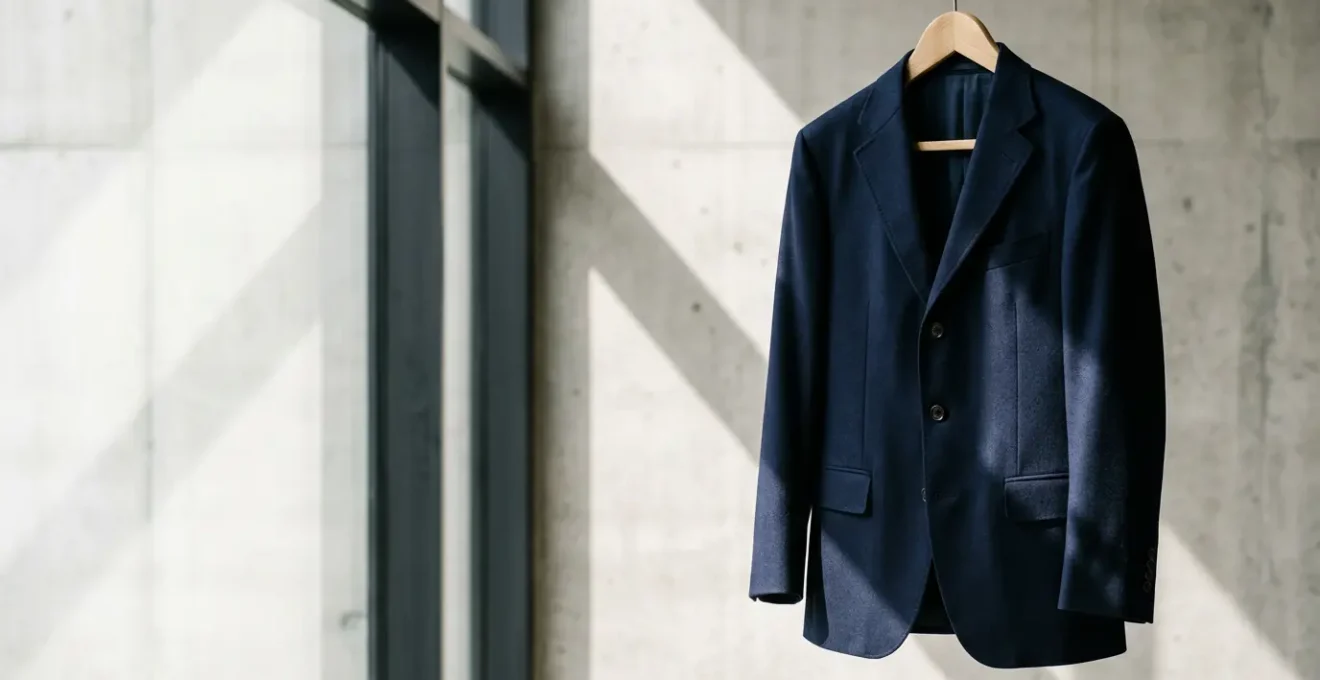
The secret to an expensive look isn’t the price tag; it’s the architectural precision of the fit.
- Off-the-rack garments are built for a statistical ‘average’ that almost no one embodies, making fit the true differentiator of quality.
- Strategic alterations like hemming and waist adjustments are cost-effective investments, while structural changes like shoulders are costly traps to avoid.
Recommendation: Dedicate 30% of your clothing budget to tailoring. This simple allocation transforms budget-friendly pieces into custom-fit garments that project confidence and command respect.
In the pursuit of a polished appearance, many fall into the trap of equating price with quality. There’s a pervasive belief that a hefty price tag and a recognizable designer logo are the sole gatekeepers of elegance. You might have experienced it yourself: saving up for that coveted $500 designer jacket, only to find it hangs imperfectly, the shoulders slightly too wide, the sleeves a fraction too long. It feels… off. The confidence you expected to feel is replaced by a nagging sense of disappointment.
The common advice is to “invest in quality pieces” or “buy classic styles,” but this advice misses the fundamental truth known to every master tailor. The fabric and the brand are merely the raw materials. The true art, the element that separates the amateur from the connoisseur, is the mastery of the silhouette. It’s about understanding the architectural principles of how fabric drapes over the unique topography of a human form.
But what if the secret to a high-end look wasn’t about spending more, but about spending smarter? What if the key was not in the label, but in the line? This is the core philosophy of a tailor. We see a $50 jacket not as a finished product, but as a canvas. With a strategic investment in tailoring, that inexpensive garment can be sculpted to your body, creating a bespoke silhouette that a generic, off-the-rack luxury item can never replicate.
This guide deconstructs that very principle. We will explore the structural reasons why standard sizing is a myth, learn the critical alterations that provide the most impact, and understand how to allocate your budget to build a wardrobe that looks and feels truly custom-made. Prepare to shift your perspective from buying clothes to engineering your style.
This article provides a detailed roadmap for transforming your wardrobe by prioritizing fit over brand names. Follow along as we dissect the key elements of silhouette engineering to achieve a truly polished and expensive look, regardless of your budget.
Summary: The Master Tailor’s Guide to Looking Expensive on a Budget
- Why Off-the-Rack Clothing Fits Only 10% of the Population?
- How to Pin Your Own Clothes to Show the Tailor What You Want?
- Shoulders or Waist: Which Alteration Is Impossible to Fix Cheaply?
- The Pant Length Mistake That Makes You Look Shorter
- How to Allocate Your Budget: 70% Buying, 30% Tailoring?
- How to Develop a Signature Work Style That Commands Respect?
- How to Identify “Micro-Trends” to Avoid Buying Clothes That Expire in 3 Months?
- How to Develop a Signature Work Style That Commands Respect?
Why Off-the-Rack Clothing Fits Only 10% of the Population?
The fundamental flaw of the fashion industry is its reliance on a ghost: the “average” person. Every garment you see on a rack is designed and graded for a standardized set of measurements, a statistical composite that, in reality, represents very few living, breathing individuals. This is not hyperbole; it is a documented fact. For example, a comprehensive body measurement survey found that only 10 to 20 percent of Americans fit the previous standards used by manufacturers. This means that for 80-90% of the population, off-the-rack clothing is guaranteed to be a compromise from the very start.
The historical root of this problem reveals its absurdity. The concept of standardized sizing originated from a well-intentioned but ultimately doomed project in the 1940s. Statisticians attempted to measure nearly 15,000 women to create a uniform system for the U.S. Women’s Army Corps. However, they quickly discovered an immense diversity in body shapes that couldn’t be simplified. Their proposed system was so complex and impractical for mass manufacturing that it was rejected. Instead, the industry adopted a simplified, flawed model that we are still living with today. This legacy ensures that most garments will fail to correctly map to an individual’s unique fabric topography—the specific curves, lengths, and proportions of their body.
When you buy off-the-rack, you’re buying a garment designed for a non-existent median. The shoulders might be right, but the waist is too loose. The inseam might be perfect, but the seat is too tight. This is not a failure of your body, but a failure of the system. Understanding this is the first step toward sartorial liberation. You stop trying to fit into the clothes and start making the clothes fit you. This is the foundational principle of silhouette engineering: treating the store-bought garment as a starting point, not a final product.
Therefore, the act of tailoring is not merely a repair or an adjustment; it is the act of correcting a fundamental design flaw and personalizing a mass-produced object into something uniquely yours.
How to Pin Your Own Clothes to Show the Tailor What You Want?
Walking into a tailor’s shop and saying “make this fit better” is like walking into a kitchen and saying “make me some food.” The result is left entirely to chance. To achieve a truly bespoke fit, you must become an active participant in the process. You must learn to communicate your vision with precision. The most powerful tool for this is the humble pin. By pinning a garment yourself, you create a physical blueprint that translates your subjective desires into concrete, actionable instructions for the artisan.
This process is not about achieving perfect, tailor-ready seams at home. It’s about indicating intent. A few strategically placed pins can communicate volumes about where the fabric is bunching, where a line needs to be slimmed, or where a hem should fall. It removes ambiguity and ensures that your vision of the final product is perfectly aligned with the tailor’s execution. This collaboration is the essence of high-end tailoring.
This image demonstrates the precise, deliberate action of manipulating fabric. It’s this level of detailed control that you are communicating to your tailor when you mark up a garment. The goal is to guide their hands to sculpt the fabric according to your body’s specific landscape.
By following a methodical approach, you can effectively mark up a garment to show exactly what needs to be done. The following steps provide a framework for this essential communication.
Your Action Plan: The Strategic Pinning Method
- Put on the garment with the exact shoes and undergarments you intend to wear with it. This is non-negotiable for establishing the correct proportions and foundation.
- Stand naturally before a full-length mirror. Identify the problem areas: where does excess fabric gather, or where do seams pull and create tension?
- For side seams, pinch the excess fabric vertically along the existing seam. Use safety pins to create a new, curved line that follows the contour of your torso.
- For sleeve or pant length, carefully fold the excess material under to your desired endpoint and place pins horizontally along the fold. Ensure both sides are symmetrical.
- Document your work. Take clear photos from the front, side, and back with the pins in place. This serves as your visual brief during the consultation.
This preparation transforms your tailor appointment from a passive request into an active, creative collaboration, guaranteeing a result that is not just “better,” but perfect.
Shoulders or Waist: Which Alteration Is Impossible to Fix Cheaply?
Not all alterations are created equal. The difference between a simple, affordable fix and a costly, complex reconstruction is the key to smart purchasing. As a tailor, I see clothing as architecture. You can easily move a non-load-bearing wall (like taking in a waist), but moving a foundational pillar (like the shoulder) requires deconstructing and rebuilding the entire structure. This is the single most important rule to remember when shopping: buy for the shoulders, tailor for the waist.
The shoulder seam is the primary anchor of any jacket or structured top. It dictates how the entire garment hangs. The armhole (or ‘scye’) is a complex, three-dimensional curve that must align perfectly with your own shoulder point and allow for movement. To alter this involves removing the sleeves, recutting the shoulder cap, adjusting the chest panels, and then re-setting the entire assembly. This is not an alteration; it is a surgical procedure on the garment, and it is priced accordingly. In many cases, the cost will exceed the value of an inexpensive jacket, and the risk of a poor result is high.
In contrast, alterations to the waist, hem, or sleeve length (from the cuff) are far more straightforward. These adjustments typically involve modifying straight or gently curved seams that do not bear the structural load of the garment. They are the high-impact, low-cost modifications that deliver the most significant visual return on investment, transforming a boxy, generic shape into a sleek, customized silhouette.
The following table, based on average market rates, starkly illustrates the chasm in cost and complexity between different types of alterations. As the data shows in this comparative analysis of alteration costs, there is a clear hierarchy of difficulty.
| Alteration Type | Average Cost (USD) | Complexity Level | Recommendation |
|---|---|---|---|
| Hem pants/trousers | $18-$35 | Simple | Always worth doing |
| Take in waist | $28-$38 | Moderate | Cost-effective investment |
| Shorten sleeves (from cuff) | $25-$32 | Moderate | Good value alteration |
| Slim jacket sides | $40-$50 | Moderate | Worth it for quality pieces |
| Adjust jacket shoulders | $75-$96 | Complex | Only for premium garments |
| Shorten sleeves (from shoulder) | $30-$84 | Very Complex | Evaluate cost vs. jacket value |
The consensus among professionals is clear, as this advice from The Modest Man underscores. The shoulder is the one area where compromise is not an option.
Shoulder alterations are tricky, at best. They’re often impossible and will only make your suit look worse (and cost you a lot of hard-earned money). Most tailors won’t even attempt to this operation. If the shoulders are too wide or narrow, don’t buy the jacket.
– The Modest Man, How to Tailor a Suit Jacket, Sport Coat or Blazer (With Prices)
Understanding this hierarchy is your greatest asset in the fitting room. It empowers you to instantly assess a garment’s potential and avoid costly mistakes, ensuring every dollar spent on tailoring is a wise investment in your image.
The Pant Length Mistake That Makes You Look Shorter
Among all the elements of fit, the length of your trousers is perhaps the most powerful and most misunderstood. The point where your pant leg meets your shoe is a critical juncture that can create a clean, elongated vertical line or a sloppy, truncated one. The common mistake is an excess of fabric, creating a pooling effect known as a “full break.” This excess material visually interrupts the line of the leg, effectively shortening your stature and broadcasting a lack of attention to detail.
The “break” refers to the fold or crease in the fabric that forms above the shoe. The amount of break is a deliberate style choice, and the modern sartorial consensus leans heavily toward a cleaner, shorter finish. For a sharp, contemporary look that maximizes perceived height, the ideal is a no break or slight break. This means the trouser hem just kisses the top of your shoe, creating an unbroken line from your waist to your foot. This clean finish is the hallmark of a custom-tailored garment.
Here is a breakdown of the different types of breaks and their visual impact:
- No Break: The hem ends just at the top of the shoe, creating no fold. This is the most modern and sharpest look, creating the longest possible leg line. It is especially effective for slim-cut trousers and for individuals of shorter stature.
- Quarter Break (or Slight Break): The fabric has a very subtle bend where it meets the shoe. This is a versatile, contemporary standard that works well for most business and casual settings.
- Half Break (or Medium Break): A single, noticeable horizontal fold forms at the shoe. This is a more traditional, classic business look. It can work for taller individuals but begins to introduce visual weight at the ankle.
- Full Break: Multiple creases stack up above the shoe. Once a staple of traditional suiting, this is now largely considered dated and sloppy. It almost universally makes the wearer appear shorter and less put-together.
The key is to understand that the goal is to maintain a strong, uninterrupted vertical line. Any significant pooling of fabric at the ankle shatters this optical illusion. A precise hem, costing only a few dollars at a tailor, is one of the highest-return investments you can make in your appearance. It is a subtle detail that communicates a profound level of polish and intent.
Always bring the shoes you intend to wear with the trousers to your tailor. This is the only way to achieve the perfect length and craft a clean, elegant line from hip to heel.
How to Allocate Your Budget: 70% Buying, 30% Tailoring?
The conventional approach to a clothing budget is to spend 100% of it on acquiring new items. This is a fundamental strategic error. A more sophisticated and effective model is to think of your clothing budget as an investment portfolio, with a portion allocated specifically for enhancement. I advocate for the 70/30 rule: allocate 70% of your budget to purchasing garments and reserve a dedicated 30% for tailoring. This shift in mindset from pure acquisition to acquisition-plus-optimization is the cornerstone of building a high-quality wardrobe on a budget.
This strategy is rooted in the principle of cost-per-wear investment. A garment’s true cost is not its price tag, but its price divided by the number of times you wear it. An ill-fitting designer piece that languishes in your closet has an infinitely high cost-per-wear. Conversely, an inexpensive but perfectly tailored garment that you wear frequently becomes an incredibly sound investment. Tailoring, therefore, is not an extra expense but a mechanism for maximizing the value of your initial purchase.
This isn’t just theory; it’s borne out by simple math and financial logic. Investing in fit transforms a disposable item into a durable asset.
The Cost-Per-Wear Analysis: $50 Jacket + $40 Tailoring vs. $500 Designer
A detailed cost-per-wear analysis demonstrates the financial wisdom of investing in tailoring over brand premiums. A $50 jacket with $40 in tailoring ($90 total) worn 100 times costs just $0.90 per wear. By comparison, a $500 designer jacket worn the same number of times costs $5.00 per wear—over five times as much for a potentially inferior fit. The analysis further found that spending twenty dollars on alterations for a fifteen-dollar shirt transforms it into a garment that looks and feels like it cost ten times more, proving that fit trumps brand recognition in perceived quality.
Moreover, this approach has a powerful secondary benefit: sustainability. By tailoring clothes, you are investing in them, making them more valuable to you and extending their lifespan. Research has shown that extending a garment’s active use by just nine months can reduce its environmental footprint by 20-30%. A tailoring budget is, therefore, also an investment in a more mindful and less disposable approach to fashion.
Stop thinking about how many items you can buy and start thinking about how many perfectly-fitting, high-value outfits you can create. That is the path to true, sustainable style.
How to Develop a Signature Work Style That Commands Respect?
A signature work style is not about having a closet full of clothes; it’s about having a clear, consistent visual message. It’s a uniform of your own making, one that communicates competence, intention, and an unwavering attention to detail before you even speak a word. In a professional environment, this visual authority is invaluable. And the single most important element in crafting this authority is impeccable fit. Tailoring is the tool that elevates your style from incidental to intentional.
An ill-fitting garment, no matter how expensive, creates visual noise. It bunches, it pulls, it creates unflattering lines. This visual disarray subtly signals a lack of precision, a tolerance for imperfection. Conversely, a garment that has been sculpted to your form creates a clean, harmonious silhouette. It moves with you. It projects an aura of control and composure. This is because a perfect fit suggests a custom origin; it implies that the garment was made for you and you alone, which is the ultimate luxury.
Nothing reveals cheap clothing faster than poor fit. Ill-fitting garments bunch awkwardly, pull in wrong places, and create unflattering silhouettes regardless of their actual quality. Conversely, properly fitted clothing automatically appears more expensive because it suggests custom construction and attention to detail.
– Rolling Out Style Team, 3 Styling Tricks Making Cheap Clothes Look Designer Quality
Developing your signature style begins with defining your key pieces—the blazer, the trouser, the dress—and then committing to their perfection. It means finding a brand whose basic cut works for you and then taking every single piece to your tailor to dial it in. Over time, you build a collection of garments that are not just clothes, but extensions of your professional persona. Your “uniform” becomes a reliable source of confidence, eliminating daily decision fatigue and ensuring you always present the best version of yourself.
This consistency builds a powerful personal brand. When your appearance is consistently sharp and intentional, it reinforces the perception that your work is the same. It’s a non-verbal cue that you are in control, you value precision, and you respect yourself and the environment you are in. This is the foundation of a style that doesn’t just look good, but actively commands respect.
Start with one key garment. Buy an inexpensive but well-made version, get it tailored to perfection, and notice the difference it makes not just in how you look, but in how you feel and how you are perceived.
How to Identify “Micro-Trends” to Avoid Buying Clothes That Expire in 3 Months?
The fashion industry thrives on planned obsolescence. “Micro-trends,” born on social media and fueled by fast fashion, are designed to have an incredibly short lifespan. They are the exaggerated puff sleeves, the extreme cut-outs, the color of the month—garments designed to look dated within a single season, compelling you to buy the next new thing. Investing in these ephemeral pieces is the quickest way to a cluttered closet and a depleted bank account. The antidote is to train your eye to distinguish timeless structure from fleeting novelty.
A timeless garment is defined by classic proportions and high-quality construction. Its value is not tied to a specific moment in time. This is where a tailor’s perspective is crucial. We are trained to look at the bones of a garment: the quality of the fabric, the integrity of the seams, and its potential for alteration. Micro-trends often rely on cheap, synthetic fabrics and glued construction that cannot withstand modification. They are disposable by design. A true investment piece, regardless of price, is built to last and to be adapted.
The industry’s manipulation of sizing itself is a testament to its transient nature. The concept of “vanity sizing” has been rampant for decades, constantly shifting the goalposts to flatter consumers. This constant change demonstrates how fashion industry metrics have shifted dramatically, as a women’s size 14 in 1937 was equivalent to a size 8 in 1967, which was a size 0 in 2011. This proves that numbers on a tag are meaningless. The only metrics that matter are your own measurements and the structural quality of the garment itself.
To avoid the trap of micro-trends, you must become a more discerning shopper. Before every purchase, apply a rigorous test to assess the garment’s long-term potential. This checklist helps you analyze a piece like a tailor would, focusing on its inherent quality and adaptability rather than its temporary stylistic relevance.
Your Action Plan: The Tailorability Test
- Is the fabric quality high enough to justify tailoring investment? Look for natural fibers (wool, cotton, linen) that improve with age rather than synthetics that pill or fade quickly.
- Are the garment’s proportions classic rather than extreme? Moderate lapel widths, natural shoulder lines, and balanced silhouettes transcend trends, while exaggerated details date quickly.
- Is the construction method sewn rather than glued? Check seams and hems—stitched construction can be altered, while glued seams fall apart when modified.
- Will the total investment (purchase price + tailoring) justify at least 50 wears? Calculate your cost-per-wear to determine if the piece merits alteration expense.
- Does the garment have a neutral color palette and minimal branding? Logo-free pieces in navy, grey, black, or earth tones remain versatile for years, while branded or trendy colors limit outfit combinations.
This disciplined approach allows you to invest your resources in pieces that will serve you for years, creating a truly sustainable and timeless personal style.
Key Takeaways
- Off-the-rack is a starting point, not a destination; clothing is manufactured for a non-existent ‘average’ person, making tailoring essential for a truly good fit.
- Adopt the 70/30 rule: dedicate 30% of your clothing budget to tailoring to maximize the value and lifespan of every piece you buy.
- Prioritize shoulder fit above all else when shopping. While waists and hems are simple fixes, altering a garment’s shoulder structure is complex, costly, and often impossible.
How to Develop a Signature Work Style That Commands Respect?
We have now established the foundational principles: standard sizes are a fallacy, a budget for tailoring is a strategic necessity, and some alterations offer more value than others. The final step is to synthesize this knowledge into a coherent, repeatable system for building a signature style. This is where you move from being a consumer of clothes to being the architect of your own image. A truly commanding work style is the result of this deliberate, engineered approach.
It is not about accumulating more, but about curating better. It begins with a ruthless edit of your existing wardrobe, identifying the pieces that, with tailoring, can form the core of your professional uniform. It continues in the fitting room, where you are no longer a passive customer but an informed critic, instantly assessing a garment’s potential based on its shoulder fit and fabric quality. You know that a $50 blazer with perfect shoulders is a far better investment than a $500 one that’s slightly off, because you understand the unbreachable law of structural alterations.
Your signature style emerges from this consistency. It’s the perfectly hemisphered pant leg that always has a slight break, the blazer that always nips in perfectly at the waist, the sleeves that always end at the precise point on your wrist bone. This repetition of excellence creates a powerful, non-verbal narrative. It tells the world that you are a person who values precision, understands quality beyond a price tag, and controls every detail of your presentation. This is the essence of commanding respect through style.
Your journey begins now. Take one item from your closet—a jacket, a pair of trousers, a dress—and take it to a tailor. Invest in making it perfect. Experience the transformation not just in the garment, but in your own posture and confidence when you wear it. This is the first step in building a wardrobe that works for you, one that truly reflects your personal and professional ambitions.